Embark on a journey into the vibrant world of the multi language website, where digital horizons stretch far beyond geographical boundaries. This isn’t just about translating words; it’s about crafting experiences, weaving narratives that resonate with diverse audiences. Imagine your brand, a beacon of innovation, reaching out to cultures, sparking conversations, and forging connections that transcend language barriers. This endeavor, at its core, is about unlocking the true potential of your online presence, transforming it from a local hub into a global powerhouse.
We’ll delve into the core reasons why businesses are increasingly adopting multilingual strategies, highlighting how they directly influence international expansion efforts. We’ll explore the technical foundations required to build a successful multilingual website, from character encoding to database design. Furthermore, we’ll navigate the intricacies of translation methods, comparing the strengths and weaknesses of machine and human translation. We’ll then examine how to go beyond simple translation, embracing localization to reflect local customs and engage users.
Finally, we’ll uncover how to optimize website performance for a global audience, ensuring a smooth and enjoyable user experience, no matter where they are in the world.
Establishing the Fundamental Reasons for Developing a Multi Language Website Is Crucial for Global Reach
Embarking on a global expansion journey necessitates a strategic approach, and at the heart of this strategy lies the development of a multilingual website. This isn’t merely a cosmetic upgrade; it’s a fundamental shift that empowers businesses to transcend linguistic barriers and engage with a diverse international audience. This transformation is pivotal for those looking to establish a robust global presence.Businesses are driven to adopt multilingual website strategies for a multitude of compelling reasons.
Firstly, it significantly expands market reach. By offering content in multiple languages, companies can tap into previously inaccessible markets, connecting with potential customers who may not be fluent in the primary language of the website. Secondly, a multilingual website improves user experience. Customers prefer to interact with content in their native language, leading to increased engagement, reduced bounce rates, and a higher likelihood of conversion.
Thirdly, multilingual websites enhance search engine optimization (). Creating content in multiple languages allows businesses to target a wider range of s, improving their visibility in search engine results pages (SERPs) across different regions. Fourthly, it fosters trust and credibility. Showing a commitment to catering to diverse linguistic needs signals a company’s dedication to its customers, enhancing brand perception and fostering loyalty.
Finally, multilingual websites streamline international sales and support. By providing localized product information, pricing, and customer service options, businesses can simplify the purchasing process and provide superior support to international customers.
Enhancing Brand Credibility and Customer Trust
The importance of a multilingual website in building brand credibility and customer trust within diverse cultural contexts cannot be overstated. By demonstrating a commitment to understanding and serving the specific needs of customers in their native languages, businesses create a positive and lasting impression. Here are five compelling reasons why a multilingual website can enhance brand credibility and customer trust:
- Demonstrates Respect and Understanding: Offering content in a customer’s native language shows respect for their culture and values. This conveys that the business cares about providing a personalized experience.
- Improves User Experience: Customers are more likely to trust and engage with a website that provides information in a language they understand. This results in a smoother and more enjoyable browsing experience.
- Enhances Accessibility: Multilingual websites make information accessible to a wider audience, including those who may not be proficient in the primary language. This inclusivity fosters trust and goodwill.
- Boosts Purchase Intent: Customers are more likely to purchase from a website that speaks their language. This increased conversion rate directly impacts brand credibility by demonstrating a commitment to customer satisfaction.
- Strengthens Brand Reputation: A multilingual website portrays a global and customer-centric image, strengthening the brand’s reputation as a reliable and trustworthy entity in the international market.
Correlation Between Language Support and Market Penetration
The ability of a business to penetrate international markets is directly influenced by its language support capabilities. Failing to address linguistic differences can lead to significant barriers to entry and hinder growth. The following table illustrates the correlation between language support and market penetration, highlighting the impact of language barriers on business expansion.
| Language Support Level | Market Penetration | Impact on Growth |
|---|---|---|
| No Language Support | Limited to Domestic Market | Significant barriers to entry; severely restricts international expansion. Businesses are confined to their domestic market, limiting their potential customer base and revenue streams. |
| Basic Translation (e.g., product descriptions) | Moderate International Reach | Improves accessibility but may not fully engage customers. This approach is a step in the right direction, but it may not be enough to build trust and fully engage international customers. Businesses may struggle to compete effectively with companies that offer full language support. |
| Comprehensive Multilingual Website (full localization) | High International Reach; Accelerated Growth | Facilitates deeper customer engagement and enhances brand credibility. Full localization, which includes adapting content to local customs and preferences, fosters trust and loyalty. Businesses can experience significant growth and increased market share. |
For example, consider the case of a US-based e-commerce company that only offers its website in English. While it might see some international traffic, it will struggle to capture significant market share in countries like Japan, where English proficiency is relatively low. In contrast, a similar company that invests in a fully localized website, including Japanese language support, would likely experience a substantial increase in sales and brand recognition within the Japanese market.
Understanding the Core Technical Requirements for Building a Multi Language Website Is a Prerequisite
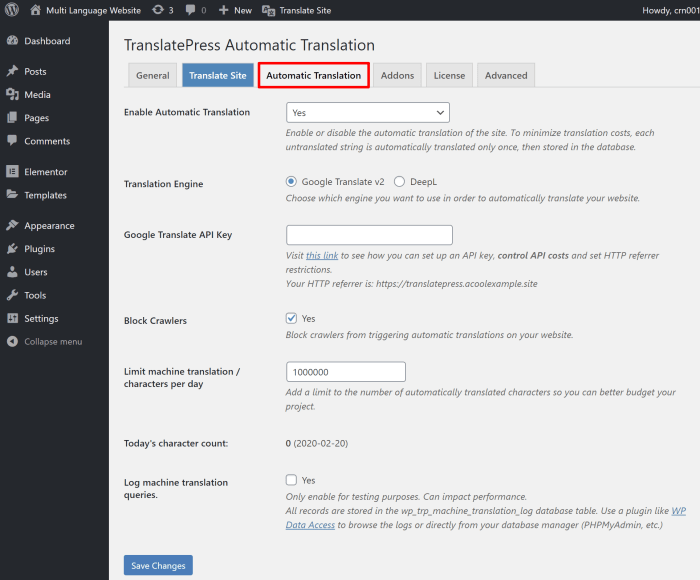
Embarking on the journey of creating a multilingual website necessitates a solid grasp of the underlying technical infrastructure. Think of it as constructing a house; a strong foundation is crucial for enduring the test of time and the varied demands of its inhabitants. Without a well-planned technical framework, your multilingual website may stumble, falter, or even crumble under the weight of its own ambitions.
Let’s delve into the essential technical elements that will lay the groundwork for a successful global presence.Understanding these technical elements is the first step toward reaching a global audience.
Character Encoding, URL Structure, and Database Design
At the heart of a multilingual website lies the ability to represent and manage text from diverse languages. Character encoding, specifically UTF-8, is your digital lingua franca. It’s the standard that allows your website to display characters from virtually any language, from the familiar Latin alphabet to the intricate symbols of Chinese or the flowing script of Arabic. Imagine trying to build a bridge without the proper tools; UTF-8 is the essential toolkit for multilingual web design.The structure of your URLs also plays a pivotal role.
A well-designed URL structure not only helps search engines understand the language of a specific page but also improves user experience. There are several approaches: using language subdirectories (e.g., `www.example.com/fr/` for French), language subdomains (e.g., `fr.example.com`), or language parameters in the URL (e.g., `www.example.com/?lang=fr`). Each method has its pros and cons; however, the chosen approach should be consistent across the entire website for optimal search engine optimization () and user navigation.Database design is the final, crucial piece of the puzzle.
The database must be structured to handle multiple languages efficiently. This typically involves storing content in separate language-specific fields or using a separate table for translations. The database design should also account for the directionality of languages (left-to-right or right-to-left) to ensure proper text rendering. Careful planning at this stage prevents potential headaches down the line, ensuring that your website can seamlessly display content in any language.
Key Steps in Content Translation and Localization
The process of translating and localizing website content requires a structured approach. It’s akin to orchestrating a symphony; each instrument (element) must play its part in harmony to create a beautiful piece of music. This comprehensive checklist provides a roadmap for a smooth and successful content translation and localization process.
- Content Extraction: The initial step involves extracting all translatable content from your website. This includes text from the HTML, CSS, JavaScript files, and the database. Use specialized tools or plugins to automate this process and streamline content management.
- Translation: Engage professional translators who are native speakers of the target languages. Ensure the translations are accurate, culturally appropriate, and reflect your brand’s voice. Remember that machine translation can be a helpful starting point, but it’s rarely a substitute for human expertise.
- Localization: Localization goes beyond mere translation; it involves adapting the content to the specific cultural nuances of the target audience. This includes adjusting dates, times, currencies, and images to resonate with local preferences.
- Content Review and Editing: Review the translated and localized content meticulously. Proofread for accuracy, clarity, and consistency. Consider involving native speakers for quality assurance.
- Integration: Integrate the translated content back into your website. Ensure that the translated content is displayed correctly and that the website’s functionality remains intact.
- Testing: Conduct thorough testing to ensure the translated content displays correctly across all browsers and devices. Test forms, links, and other interactive elements to guarantee seamless user experience.
- Deployment: Deploy the translated and localized website to the live environment. Monitor website performance and user feedback to identify any issues and make necessary adjustments.
- Ongoing Maintenance: Regularly update the translated content to reflect any changes to the original website. This includes adding new content, updating existing content, and making sure the content is fresh and accurate.
Comparative Analysis of Content Management Systems (CMS) for Multilingual Support, Multi language website
Choosing the right Content Management System (CMS) is a crucial decision when building a multilingual website. It is like selecting the perfect car for a long journey; the vehicle’s features and capabilities will significantly impact the experience. This table compares several popular CMS platforms and their respective strengths and weaknesses in terms of multilingual support.
| CMS | Multilingual Capabilities | Strengths | Weaknesses |
|---|---|---|---|
| WordPress | Offers extensive multilingual support through plugins (e.g., WPML, Polylang). | Large community, vast plugin ecosystem, ease of use, cost-effective (free core). | Plugin reliance can lead to performance issues, plugin compatibility concerns, potential for increased complexity. |
| Drupal | Provides robust multilingual features out-of-the-box, including translation management and content versioning. | Highly customizable, strong community support, flexible architecture, suitable for complex websites. | Steeper learning curve, more complex setup and configuration, can require more technical expertise. |
| Joomla! | Offers built-in multilingual support with extensions for translation and localization. | User-friendly interface, strong community support, relatively easy to set up. | Can be less flexible than Drupal, plugin quality can vary, and fewer native multilingual features compared to Drupal. |
| Magento | Designed for e-commerce, provides excellent multilingual and multi-currency support. | Robust e-commerce features, scalability, extensive customization options. | Complex setup, resource-intensive, steeper learning curve, and can be expensive. |
Selecting Appropriate Translation Strategies for Website Content Is a Vital Consideration
Navigating the world of website localization means more than just swapping words; it’s about conveying your message with precision and cultural relevance. Choosing the right translation strategy is paramount, impacting everything from brand perception to user engagement and, ultimately, your global success. A thoughtful approach ensures your content resonates with international audiences, fostering trust and building lasting relationships.
Translation Methods: A Comprehensive Overview
Let’s delve into the various translation methods available, each with its own set of strengths and weaknesses. Understanding these nuances is key to making informed decisions for your multilingual website.
Machine translation, powered by sophisticated algorithms, offers a quick and often cost-effective solution. However, it can sometimes struggle with nuanced language and cultural contexts. Human translation, on the other hand, relies on the expertise of native speakers to ensure accuracy and cultural sensitivity. Finally, hybrid approaches combine the speed of machine translation with the precision of human review, offering a balanced solution.
Here’s a closer look:
-
Machine Translation (MT): Think of this as the speedy, albeit sometimes imperfect, assistant. MT uses software to automatically translate text. Its speed is undeniable, and the cost is usually quite low.
- Advantages: Swift turnaround times, low cost, and scalability. It’s ideal for large volumes of content where speed is critical.
- Disadvantages: Can produce inaccurate or awkward translations, struggles with complex sentence structures and idioms, and lacks cultural awareness. It can also stumble on industry-specific jargon.
- Suitability: Best for informational content, internal communications, or content where speed is prioritized over absolute accuracy.
- Human Translation (HT): The seasoned professional, a master of language and culture. Human translators are native speakers with a deep understanding of the source and target languages.
- Advantages: High accuracy, cultural sensitivity, nuanced understanding of language, and ability to handle complex content. It ensures the message resonates with the target audience.
- Disadvantages: Slower turnaround times, higher cost, and can be less scalable for very large projects.
- Suitability: Essential for marketing materials, legal documents, website copy, and any content where accuracy and cultural appropriateness are paramount.
- Hybrid Translation (MTPE – Machine Translation Post-Editing): A strategic blend, marrying speed and precision. This approach involves machine translation followed by review and editing by a human translator.
- Advantages: Combines the speed of MT with the accuracy of HT. Offers a good balance between cost, speed, and quality.
- Disadvantages: Requires skilled post-editors and can still be less accurate than pure human translation. The quality depends on the MT engine and the editor’s skills.
- Suitability: Suitable for a wide range of content, particularly when large volumes of text need to be translated efficiently while maintaining a reasonable level of accuracy.
Scenarios: Machine vs. Human
The choice between machine and human translation often hinges on the specific content and desired outcome. Consider these examples:
-
Machine Translation is the most efficient solution in these scenarios:
- User-Generated Content (e.g., product reviews): Rapidly translating a large volume of user reviews to understand customer sentiment.
- Internal Documentation (e.g., employee handbooks): Providing quick translations of internal documents for global teams.
- Basic News Articles: Quickly translating news articles for global audiences, where a general understanding is sufficient.
- Technical Specifications (less critical): Translating basic technical specifications where absolute accuracy is not critical.
- Website Content for purposes: Quickly translating content to expand reach, with the understanding that it may not be perfect.
- Human Translation is indispensable in these situations:
- Marketing Campaigns: Crafting compelling marketing copy that resonates with the target audience and reflects brand values.
- Legal Documents: Ensuring the accuracy and legal compliance of contracts, terms of service, and other legal materials.
- Medical Information: Translating medical information, where accuracy is critical for patient safety.
- Creative Content (e.g., website copy, slogans): Translating website copy to maintain the brand voice and cultural nuances.
- Customer Support Interactions: Providing accurate and empathetic responses to customer inquiries in different languages.
Cost-Benefit Analysis: Translation Strategies
The following table provides a cost-benefit analysis of different translation strategies. This analysis is based on general industry averages, and actual costs may vary depending on factors such as language pairs, content complexity, and vendor rates. This is not an exact science, but a practical guide.
| Translation Strategy | Cost (per word) | Accuracy | Speed | Cultural Sensitivity |
|---|---|---|---|---|
| Machine Translation (MT) | Very Low ($0.01 – $0.05) | Low | Very Fast | Very Low |
| Human Translation (HT) | High ($0.10 – $0.30+) | High | Slow | High |
| Machine Translation Post-Editing (MTPE) | Medium ($0.05 – $0.15) | Medium | Fast | Medium |
| Professional Translation with Review | High ($0.15 – $0.40+) | Very High | Medium | Very High |
Note: The table above offers general guidelines. Specific costs and benefits will vary depending on the project. For example, highly specialized content or rare language pairs may increase costs.
Implementing Effective Localization Techniques for Website Content Is Essential for Global Engagement

Let’s face it: simply translating your website isn’t enough to truly connect with a global audience. While translating the words is the first step, it’s like only learning the notes of a song and missing the soul. True global engagement demands a deeper dive, a process called localization. It’s about adapting your content to resonate with the specific cultural nuances of your target market, creating a genuinely engaging and relevant experience.Localization goes far beyond just replacing words.
It’s about understanding and respecting the cultural tapestry of each region, recognizing that what works in one place might fall flat, or even be offensive, in another. Think of it as crafting a bespoke suit rather than a generic off-the-rack one. You’re tailoring the experience to fit the unique “body” of each culture. This attention to detail isn’t just about being polite; it’s a strategic move that significantly boosts user engagement and fosters a sense of trust and understanding.
The Significance of Localization Beyond Translation
It’s tempting to think of translation and localization as interchangeable, but they’re not. Translation is the mechanical act of converting text from one language to another. Localization, however, is the art of adapting your entire website to a specific locale, ensuring that it feels native to the user. This means addressing a range of factors that influence how a user perceives and interacts with your site.Consider, for example, the use of currencies.
Displaying prices in the local currency is a bare minimum. But what about payment methods? Do you offer the preferred payment options for that region? Then there’s the matter of date and time formats. A date format that’s standard in the US (MM/DD/YYYY) might be confusing in Europe (DD/MM/YYYY).
Similarly, time formats and the use of AM/PM versus the 24-hour clock are crucial considerations. Beyond these, you’ll need to adapt content to reflect local customs, holidays, and even humor. Think about the tone of your content, too. What’s considered acceptable in one culture might be seen as overly formal or casual in another.The benefits of effective localization are numerous.
It increases user trust and credibility, leading to higher conversion rates and customer loyalty. It demonstrates respect for the local culture, fostering a positive brand image. Furthermore, it improves user experience (UX), making your website easier to navigate and understand. Ultimately, localization transforms your website from a generic, one-size-fits-all platform into a welcoming and engaging destination for users around the globe.
This approach demonstrates a commitment to understanding and valuing the unique needs of each audience, building lasting relationships that translate into real-world success.
Actionable Procedures for Culturally Appropriate Website Design and UI
To ensure your website design and UI elements resonate with your target audience, consider these five actionable procedures:* Conduct Thorough Market Research: Before you even think about design, dive deep into the cultural preferences of your target audience. Understand their values, expectations, and the visual language they respond to. Research the websites they frequent and analyze the elements that make them successful.
Adapt Color Palettes
Colors evoke different emotions and meanings across cultures. For example, in many Western cultures, white symbolizes purity, while in some Eastern cultures, it’s associated with mourning. Select color palettes that align with the cultural connotations of your target market.
Localize Imagery and Icons
Avoid using images or icons that could be misinterpreted or offensive. Consider the cultural context of the images. Ensure that the people and situations depicted are representative of the target audience and their values.
Optimize Navigation and Layout
Some cultures prefer a more streamlined navigation experience, while others appreciate a more detailed and visually rich layout. Research the preferred navigation styles and information architecture of your target audience and tailor your website accordingly.
Test and Iterate
After implementing your localization efforts, rigorously test your website with users from your target market. Gather feedback on the design, content, and overall user experience. Be prepared to iterate and make adjustments based on the feedback you receive.
Key Differences in UI/UX Considerations Across Cultures
Understanding the differences in UI/UX considerations across various cultures is paramount for global success. The following table highlights some key distinctions, showcasing how seemingly small design choices can significantly impact user experience:
| Feature | Western Cultures (e.g., US, UK) | Eastern Cultures (e.g., China, Japan) | Middle Eastern Cultures (e.g., UAE, Saudi Arabia) |
|---|---|---|---|
| Color Palettes | Often favor clean, minimalist designs with a focus on white space. Colors can be used to create contrast and guide the user’s eye. Blue and green are often associated with trust and growth. | May embrace bolder colors and more elaborate designs. Colors hold significant symbolic meanings; red often represents luck and prosperity. Use of vibrant color combinations and detailed imagery is common. | Frequently utilize warm colors, such as gold, red, and orange, which symbolize wealth, hospitality, and spirituality. Design may incorporate intricate patterns and calligraphy. |
| Imagery | Focus on realistic photography and images that convey a clear message. Avoid overly complex or cluttered visuals. Emphasis on visual clarity and direct communication. | Emphasize storytelling through imagery. May incorporate illustrations, anime, or manga styles. Images often communicate cultural values and traditions. | May feature images that depict family, community, and cultural heritage. Consider the portrayal of people and ensure they are culturally appropriate. Avoid imagery that is considered offensive or sensitive. |
| Navigation Styles | Typically employ clear, concise navigation menus and information architecture. Prioritize ease of use and quick access to information. Focus on user-centered design. | May feature more complex navigation structures, with a focus on visual cues and hierarchical organization. Prioritize the presentation of a large amount of information. May use icons and visual aids to guide users. | May incorporate a combination of visual and textual navigation. Consider the use of right-to-left language support and adapting the layout to accommodate this direction. |
Optimizing Website Performance for a Multi Language Audience Is Necessary for a Smooth Experience
Let’s face it: in today’s globalized world, a slow website is a deal-breaker. No matter how beautifully designed or meticulously translated your content is, if it takes ages to load, users will bounce faster than a kangaroo on a trampoline. This is especially true when catering to a multi-language audience, where users might be accessing your site from various corners of the globe, each with its own internet infrastructure and connection speeds.Website speed and performance have a massive impact on user experience, acting as the invisible hand that either welcomes visitors or pushes them away.
A sluggish site leads to frustration, impatience, and ultimately, lost conversions. Imagine a potential customer in Tokyo, eagerly awaiting to browse your products, only to be met with a glacial loading speed. They’ll likely abandon ship and find a competitor’s site that offers a smoother, faster experience. Similarly, a user in rural Brazil with a slower internet connection will experience even greater frustration.
To minimize latency, you need to think strategically about where your users are and how you can deliver your content as quickly as possible.
Minimizing Latency and Optimizing Content
To ensure a lightning-fast experience for your diverse audience, here are some key methods to optimize your website content for different languages and regions:* Image Optimization: Images often make up the bulk of a webpage’s file size. Compress images without sacrificing quality using tools like TinyPNG or ImageOptim. Use responsive images (`
For example, a user on a mobile device should receive a smaller image than a user on a desktop computer.
* Caching Strategies: Implement browser caching to store static assets (like images, CSS, and JavaScript files) on the user’s device. This reduces the number of requests the browser needs to make on subsequent visits, leading to faster loading times. Server-side caching, using tools like Varnish or Memcached, can also significantly improve performance by storing frequently accessed content.
* Content Delivery Networks (CDNs): CDNs are geographically distributed networks of servers that cache your website’s content. When a user requests your site, the CDN automatically serves the content from the server closest to their location. This dramatically reduces latency, as the content travels a shorter distance. Popular CDNs include Cloudflare, Amazon CloudFront, and Akamai.
* Code Minification and Compression: Minify your HTML, CSS, and JavaScript files to remove unnecessary characters and reduce file sizes. Use Gzip compression to further reduce file sizes when transferring data from the server to the user’s browser. These steps significantly contribute to faster load times.
* Database Optimization: Ensure your database is optimized for speed. This includes using efficient database queries, indexing relevant fields, and optimizing database server configuration. For multi-language sites, consider using a database structure that efficiently handles translated content. For example, use a dedicated table to store translations, linking them to the original content via unique identifiers.
Website Loading Times: Impact on User Metrics
The table below illustrates the effects of website loading times on user bounce rates and conversion rates, broken down by different regions or language groups. These figures are illustrative and can vary based on industry and website type, but they provide a general overview of the impact of speed on user behavior. The data is based on industry averages and real-world observations from various studies on website performance.
| Region/Language Group | Average Loading Time (seconds) | Estimated Bounce Rate | Estimated Conversion Rate |
|---|---|---|---|
| North America (English) | 1-2 | 20-30% | 2-4% |
| Europe (Various Languages) | 2-3 | 30-40% | 1-3% |
| Asia (Various Languages) | 3-4 | 40-50% | 0.5-2% |
| South America (Spanish/Portuguese) | 4-5 | 50-60% | 0.25-1% |
| Africa (Various Languages) | 5+ | 60-70%+ | <0.5% |
