Imagine a world where a stripped screw doesn’t spell disaster, a world where your project doesn’t grind to a halt because of a tiny, metallic tyrant. Welcome to the realm of the screwextractor, a humble tool with the power to conquer the most defiant fasteners. This isn’t just about pulling out screws; it’s about reclaiming your time, your sanity, and the joy of creation.
Prepare to journey through the fascinating landscape of screw extractors, where we’ll unearth the secrets of different types, understand their unique strengths, and learn how to choose the perfect weapon for your battle against the stuck screw.
We’ll delve into the various champions of screw extraction: the spiral flute extractor, the easy out, and the impact extractor, each with its own arsenal of techniques. You’ll learn the art of assessing a screw’s situation, considering its material, the damage inflicted, and the surrounding environment. We’ll equip you with a comprehensive toolkit, from the essential lubricants to the necessary safety gear, ensuring you’re fully prepared for the challenge.
Finally, we’ll guide you through step-by-step procedures, revealing the precise maneuvers needed to extract even the most stubborn screws, and share invaluable wisdom to avoid common pitfalls, turning frustration into triumph.
Understanding the Different Types of Screw Extractors and Their Uses in Various Scenarios

Dealing with stripped or broken screws is a common frustration, a mechanical nemesis that can halt projects and test the patience of even the most seasoned DIY enthusiasts. Fortunately, a range of tools exists to tackle this challenge, offering solutions from the simple to the more complex. Understanding these tools, their mechanisms, and their ideal applications is crucial for successful screw extraction and, ultimately, project completion.
This exploration will delve into the world of screw extractors, providing a comprehensive guide to selecting the right tool for the job.
Screw Extractor Types and Mechanisms
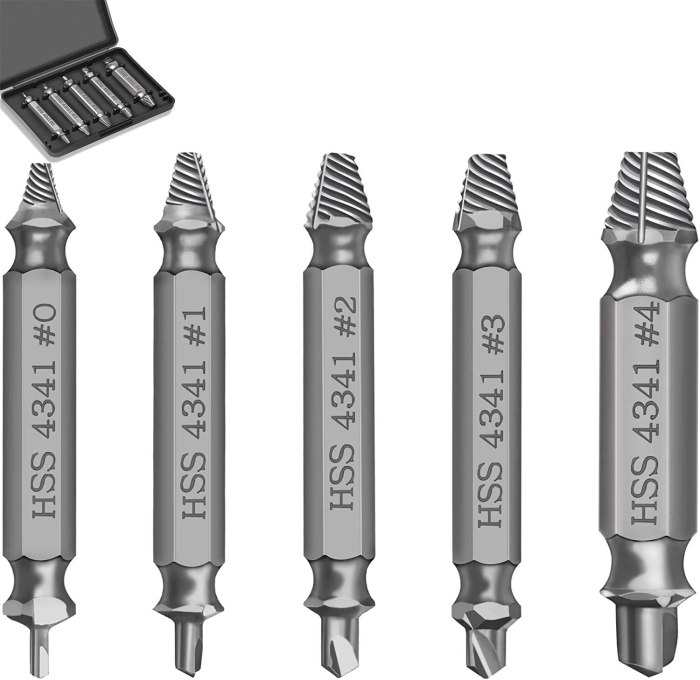
The effectiveness of a screw extractor hinges on its design and how it interacts with the damaged screw. Several types are available, each employing a unique method to grip and remove the offending fastener.The spiral flute extractor, often referred to as an “easy out,” is a classic and widely used type. These extractors feature a tapered, left-hand spiral flute design.
To use one, you first drill a pilot hole into the center of the damaged screw. Then, you insert the extractor into the hole and turn it counterclockwise. As the extractor bites into the screw, the spiral flutes grip the screw’s walls, gradually backing it out. The more torque applied, the tighter the grip becomes. This design is particularly effective on softer metals and when the screw isn’t seized too tightly.Next, there’s the easy out extractor, often mentioned in the same breath as the spiral flute extractor.
The primary difference is in the design and the material used. The “easy out” extractors are generally made of hardened steel and have a slightly different flute geometry designed for aggressive bite. They work on the same principle: a left-hand spiral designed to grip and unscrew the damaged screw.Impact extractors represent a more robust approach. These tools are designed to work with an impact driver.
They feature a tapered head with a series of flutes or teeth. You first drill a pilot hole, then insert the impact extractor. The impact driver delivers a series of sharp, rotational blows. These impacts help to loosen the screw while the flutes grip and extract it. Impact extractors are especially useful for screws that are heavily corroded or tightly seized.
They excel at delivering the necessary force to break the screw’s grip.
Screw Extractor Comparison Table, Screwextractor
Selecting the right screw extractor involves considering various factors. The following table provides a detailed comparison of the advantages and disadvantages of each extractor type, considering material compatibility, screw head type, and ease of use.
| Extractor Type | Advantages | Disadvantages | Material Compatibility | Screw Head Type | Ease of Use |
|---|---|---|---|---|---|
| Spiral Flute (Easy Out) |
|
|
Softer metals (aluminum, brass, mild steel) | Flat head, Phillips head, etc. (with pilot hole) | Moderate |
| Impact Extractor |
|
|
All metals, including hardened steel. | Flat head, Phillips head, etc. (with pilot hole) | Moderate to High (requires practice) |
| Easy Out |
|
|
Softer metals (aluminum, brass, mild steel) | Flat head, Phillips head, etc. (with pilot hole) | Moderate |
Specific Scenarios and Extractor Effectiveness
The effectiveness of a screw extractor is highly dependent on the specific situation. Understanding when each type excels, and when it might fail, is crucial for success.The spiral flute extractor shines in situations involving screws made of softer materials, such as those found in aluminum engine components or brass fittings. If a screw with a damaged head is encountered, a spiral flute extractor can often be used effectively.
The key is to avoid excessive force, which could cause the extractor to break. For example, consider a scenario where a stripped screw secures a decorative element to a piece of furniture. A spiral flute extractor, used carefully, can often remove the screw without damaging the surrounding wood. However, if the screw is severely corroded or rusted in place, a spiral flute extractor may not be strong enough.Impact extractors come into their own when dealing with stubborn screws.
For instance, in automotive repair, they are often used to remove corroded bolts from exhaust systems or suspension components. The impact action helps to break the bond between the screw and the surrounding material. However, impact extractors require more finesse; if the impact force is too high, the surrounding material can be damaged. An example is removing a rusted bolt from a car’s brake caliper.
The impact extractor, combined with penetrating oil, can often overcome the corrosion and extract the bolt.Consider the removal of a broken bolt from a cast iron engine block. In this situation, the impact extractor is likely to be the most effective choice. However, the success also depends on the quality of the impact driver and the user’s skill. The use of an impact extractor is a balancing act; too little force, and the bolt won’t budge; too much force, and the surrounding material may be damaged.
Step-by-Step Procedures for Using Different Screw Extractors Effectively: Screwextractor

Dealing with stripped or broken screws can be a frustrating experience, but thankfully, screw extractors provide a reliable solution. Mastering the correct techniques for each type of extractor is crucial for successful removal and avoiding further damage. This guide provides detailed, step-by-step procedures for using spiral flute, easy out, and impact screw extractors, ensuring you have the knowledge to tackle any screw extraction challenge.
Spiral Flute Extractor Procedure
Spiral flute extractors are designed to grip and remove screws by biting into the damaged screw head. They work best on screws that are not excessively corroded or seized. Here’s how to use them effectively:Before you begin, gather your tools: the spiral flute extractor set (usually includes different sizes), a drill with adjustable speed, a drill bit slightly smaller than the screw’s core diameter, penetrating oil (like PB Blaster or Liquid Wrench), a hammer, safety glasses, and gloves.
- Prepare the Screw: First, clean the area around the screw head to remove any debris that might interfere with the extraction process. Apply penetrating oil to the screw and allow it to sit for at least 15 minutes, or preferably longer, to help loosen the screw. This is important because it is a key step to reduce friction and improve the chances of successful extraction.
- Drill the Pilot Hole: Select a drill bit slightly smaller than the screw’s core diameter. This ensures the extractor has enough material to grip. Using a slow drill speed, carefully drill a pilot hole in the center of the damaged screw head. The pilot hole should be deep enough to accommodate the extractor’s threads, but not so deep that it damages the underlying material.
Aim for a depth roughly equal to the length of the extractor’s threads.
- Insert the Extractor: Choose the appropriate size spiral flute extractor for the pilot hole you drilled. Gently tap the extractor into the pilot hole using a hammer. The extractor’s threads should begin to bite into the screw.
- Apply Torque and Extract: Attach the appropriate wrench or tool to the extractor. Slowly and steadily apply counter-clockwise torque to the extractor. As the extractor bites into the screw, the torque will gradually increase. Continue applying pressure until the screw begins to turn and unscrew. Be patient and avoid excessive force, which could break the extractor or further damage the screw.
- Remove the Screw: Once the screw is loosened, continue turning the extractor until the screw is completely removed. Clean the extracted screw hole and inspect it for any damage. If the screw is still difficult to remove, reapply penetrating oil and allow it to soak for a longer period before attempting extraction again.
Easy Out Extractor Techniques
Easy Out extractors, also known as screw extractors, are a common choice for removing broken or stripped screws. Their tapered design allows them to grip the screw tightly as they are turned counter-clockwise.Here’s a breakdown of how to use an Easy Out extractor effectively, minimizing the risk of breakage:
- Prepare the Work Area: Clear the area around the screw. Use a wire brush to remove rust or debris, which could interfere with the extraction process.
- Drill the Pilot Hole: Select a drill bit appropriate for the size of the Easy Out extractor you intend to use. The drill bit size is usually indicated on the extractor packaging. Drill a pilot hole in the center of the broken screw. Ensure the hole is straight and deep enough to accommodate the extractor. A pilot hole that is too shallow will limit the extractor’s ability to grip the screw.
- Insert the Extractor: Insert the Easy Out extractor into the pilot hole. Use a tap handle or adjustable wrench to grip the extractor securely.
- Apply Torque and Remove: Apply counter-clockwise torque to the extractor. As the extractor bites into the screw, apply steady pressure. Avoid using excessive force, as this can cause the extractor to break inside the screw, making the situation more difficult. If the screw doesn’t move easily, try applying penetrating oil to help loosen it.
- Preventing Breakage: To prevent the extractor from breaking, avoid using excessive force. Use a slow and steady turning motion. If the screw is severely seized, consider applying heat to the surrounding area with a heat gun to expand the metal and break the bond. If the extractor breaks, it is extremely difficult to remove, often requiring specialized tools and techniques like EDM (Electrical Discharge Machining).
Impact Screw Extractor Guide
Impact screw extractors are designed for removing stubborn screws, particularly those that are rusted, seized, or have a high degree of thread locking. They utilize an impact mechanism to apply rotational force, making them highly effective.Here’s a step-by-step guide to using an impact screw extractor:
- Setup and Preparation: Choose the correct impact screw extractor bit for the screw head. Ensure the bit fits snugly into the screw head to maximize the force transfer. Use a hammer to drive the bit firmly into the screw head.
- Application of Impact Force: Place the impact screw extractor tool onto the screw head. Hold the tool firmly. Strike the end of the tool with a hammer. The impact will generate both a rotational force and a hammering action, helping to break the screw free. Experiment with the amount of force you apply to find the optimal balance between effectiveness and avoiding damage to the surrounding material.
- Screw Removal Process: Continue striking the tool with the hammer, turning the tool in a counter-clockwise direction. The impact action, combined with the rotational force, will eventually loosen the screw. Once the screw begins to turn, you can usually remove it by hand or with a screwdriver.
- Safety Precautions: Always wear safety glasses to protect your eyes from flying debris. Work in a well-lit and ventilated area. Be mindful of the surrounding materials and avoid damaging them during the impact process. If the screw doesn’t budge after a few impacts, consider applying penetrating oil and allowing it to soak before attempting again.
Preventing Screw Extraction Challenges and Avoiding Common Mistakes
Let’s face it, wrestling with a stuck screw can turn a simple project into a frustrating ordeal. The key to a successful screw extraction lies not just in the tools you use, but in the preventative measures you take and the careful execution of each step. Avoiding common pitfalls is crucial, and a little preparation goes a long way.
Common Mistakes and How to Avoid Them
Extracting a stripped or broken screw is a delicate dance, and missteps can quickly lead to disaster. It’s like trying to bake a soufflé – one wrong move and you’re left with a flat disappointment.Here are some of the most frequent errors and how to steer clear of them:
- Using the Wrong Size Extractor: This is like trying to fit a square peg in a round hole. An extractor that’s too small won’t grip, and one that’s too large can damage the surrounding material. Always choose the extractor size that matches the pilot hole you’ve drilled or, if there’s no pilot hole, the size specified for the screw. Consult the extractor’s packaging for guidance.
- Applying Excessive Force: Rushing the process is a surefire way to break an extractor or further damage the screw head. Start with gentle pressure and gradually increase it only if necessary. Patience is a virtue, especially when dealing with stubborn screws.
- Not Pre-drilling Correctly: The pilot hole is your guide, and if it’s not properly prepared, your extractor is doomed from the start. Ensure the pilot hole is centered, of the correct diameter, and deep enough to accommodate the extractor’s threads. A misaligned pilot hole is like a bad foundation for a house – everything built on it will be unstable.
- Ignoring Screw Head Condition: If the screw head is severely damaged, the extractor might not be able to get a good grip. Clean out the screw head recess and consider using a screw extractor specifically designed for damaged screws.
Importance of Lubrication and Pre-Treatment
Sometimes, even with the right tools and technique, a screw refuses to budge. This is where lubrication and pre-treatment come into play. Think of it as softening the ground before planting a stubborn seed – it makes the job a whole lot easier.Proper lubrication and pre-treatment can significantly increase your chances of success.Here’s how to prepare the area and what to use:
- Penetrating Oil: Apply a high-quality penetrating oil, such as a product containing a blend of solvents, to the screw head and surrounding area. Let it soak for at least 15-30 minutes, or even overnight for severely stuck screws. This allows the oil to seep into the threads and break down corrosion.
- Heat Application: In some cases, applying heat can help expand the surrounding metal, loosening the screw. Use a heat gun or a propane torch carefully, avoiding damage to the surrounding materials.
- Cold Application: Alternatively, for some materials, rapid cooling can help. Use a can of compressed air upside down to freeze the screw head.
- Gentle Tapping: Before attempting extraction, gently tap the screw head with a hammer and a center punch. This can help to dislodge any rust or debris and improve the extractor’s grip.
Troubleshooting Extractor Failures and Alternative Methods
Even the best-laid plans can go awry. Sometimes, extractors break or fail to remove the screw. Don’t despair; it’s not the end of the world. Think of it as a detour on the road to success.Here’s a plan of action when things go sideways:
- Broken Extractor: If the extractor breaks, carefully try to remove the broken piece with needle-nose pliers or a small magnet. Avoid trying to drill through the broken extractor, as this can damage the threads of the screw and surrounding material. If the extractor is made of hardened steel, it may be necessary to use a carbide drill bit.
- Extractor Stripping the Screw: If the extractor is stripping the screw but not removing it, try using a larger extractor or switching to a different type. You might need to use a screw extractor specifically designed for damaged screw heads.
- Alternative Extraction Methods: If the extractor fails, consider these alternative methods:
- Drilling Out the Screw: Carefully drill out the screw head using a drill bit slightly smaller than the screw’s body. Then, use pliers or a screwdriver to remove the remaining shank.
- Using a Left-Handed Drill Bit: Sometimes, a left-handed drill bit can grab the screw and unscrew it as you drill.
- Welding a Nut or Bolt: If the screw head is accessible, welding a nut or bolt to it can provide a strong grip for removal.
- Damage Control: If the screw is severely damaged or broken flush with the surface, you may need to resort to more drastic measures, such as drilling out the screw and tapping the hole for a larger screw size or using a threaded insert.
