Yoast seo content checker – Imagine a world where your words not only captivate but also climb the ranks of the digital realm. That’s the promise of the Yoast Content Checker, a digital compass guiding writers through the intricate landscape of search engine optimization. This isn’t just about s; it’s a deep dive into the very fabric of compelling content, dissecting readability, structure, and relevance to ensure your message resonates with both readers and search algorithms.
Prepare to embark on a journey of discovery, where crafting exceptional content becomes an art form.
This remarkable tool meticulously examines the core components that shape your writing’s impact. It doesn’t just grade; it guides, offering insights into sentence structure, the strategic use of transition words, and the avoidance of passive voice pitfalls. Picture Yoast as your personal writing coach, providing personalized feedback and actionable steps to elevate your content from good to extraordinary. The scoring system, with its vibrant colors, serves as a visual cue, offering a quick and easy-to-understand assessment of your content’s overall quality.
You’ll learn how to refine your prose, making it clear, concise, and irresistibly engaging for your audience.
Understanding the Fundamental Principles of the Yoast Content Quality Assessment Tool

Let’s dive into the core mechanics of the Yoast content assessment tool, the digital compass guiding writers toward -friendly content. It’s not just about s; it’s about crafting text that resonates with both search engines and, crucially, human readers. The tool scrutinizes your writing across multiple dimensions, providing actionable insights to elevate your content from good to great.
Core Components Determining Writing’s Score
The Yoast Content Quality Assessment Tool meticulously evaluates a piece of writing based on several key components. These components work in tandem to gauge the overall quality and -friendliness of your content, leading to a final score that reflects its strengths and weaknesses. The factors are designed to optimize content for both readability and search engine visibility.Readability is a cornerstone of the Yoast assessment.
The tool assesses this aspect by considering several factors: sentence length, paragraph length, and the use of headings and subheadings. It aims for a balance, encouraging writers to break up large blocks of text and structure their content for easy scanning. Think of it like a well-organized library: clear headings act as signposts, guiding readers through the information. Long sentences and paragraphs are flagged because they can overwhelm readers, making the content difficult to digest.
Yoast suggests shorter sentences, generally recommending that the average sentence length be around 20 words. Furthermore, it encourages the use of transition words, like “however,” “therefore,” and “in addition,” to create a smoother flow between ideas. These words act as bridges, connecting sentences and paragraphs and enhancing the overall coherence of the text.The use of transition words is another critical factor.
The tool evaluates the frequency and variety of these words, recognizing their importance in creating a logical flow. They act as signposts, guiding readers through the content and helping them understand the relationships between different ideas. A good distribution of transition words improves the readability score.Sentence structure also plays a significant role. Yoast analyzes the complexity of sentences, identifying those that are overly long or convoluted.
It flags the use of passive voice, which can make writing less direct and engaging. The tool encourages the use of active voice, where the subject performs the action, leading to clearer and more concise sentences. For example, instead of “The report was written by the team,” the active voice version is “The team wrote the report.” This shift enhances clarity and makes the writing more dynamic.Yoast helps writers identify and address complex sentence structures by providing specific feedback.
For instance, if a sentence is too long, the tool will highlight it and suggest ways to break it down. It also identifies instances of passive voice and offers alternatives. Consider a sentence like, “Mistakes were made during the project.” Yoast would highlight this and suggest rewriting it in active voice, such as “The team made mistakes during the project.” This approach makes the writing more direct and easier to understand.
The tool also provides suggestions on how to vary sentence structure, preventing the writing from becoming monotonous.The scoring system is straightforward. Yoast uses a color-coded system to indicate the quality of your content. Green indicates that the specific aspect is optimized, yellow suggests that improvements are needed, and red signifies that there are significant issues. For example, if your readability score is green, it means your content is easy to read.
If your score is red, it suggests that you need to optimize your content for relevant s. The color-coded system makes it easy to identify areas for improvement.The scoring system helps writers prioritize their efforts. By focusing on the areas highlighted in red or yellow, writers can make targeted improvements to enhance their content. For example, if the tool flags excessive use of passive voice (often indicated by a yellow or red light), the writer knows that rewriting those sentences in active voice will improve the score and make the content more engaging.
The color system provides an at-a-glance overview of the content’s strengths and weaknesses, allowing writers to refine their work efficiently.
Unveiling the Importance of Readability and Its Influence on User Experience through Yoast
Let’s face it: in the bustling digital landscape, capturing and holding a reader’s attention is a Herculean task. Content that’s difficult to digest is akin to a road with potholes – drivers (readers) will either slow down significantly or take a different route altogether. This is where readability, and Yoast ‘s role in measuring and improving it, becomes incredibly vital.
High-quality content isn’t just about what you say; it’s about how clearly and concisely you say it. Understanding this connection is the key to unlocking better user engagement and, ultimately, improved search engine rankings.
The Link Between Readability and User Experience
Imagine stumbling upon a website filled with dense, convoluted paragraphs, sentences that stretch on for days, and jargon that only a specialist could decipher. Would you stick around? Probably not. You’d likely bounce, meaning you’d leave the site quickly. Now, picture a website with content that’s easy to scan, with clear headings, short paragraphs, and a conversational tone.
This content invites you to stay, to explore, and to learn. The difference between these two scenarios hinges on readability.Yoast doesn’t just assess the presence of s; it delves into the very structure of your writing. It analyzes factors like sentence length, paragraph length, the use of transition words, and the presence of passive voice. By providing feedback on these elements, Yoast empowers you to create content that’s not only search engine friendly but also, and more importantly, user-friendly.
When your content is easy to read, visitors are more likely to spend more time on your page, explore more of your website, and ultimately, convert into customers or subscribers. A higher time-on-page and lower bounce rate signal to search engines that your content is valuable, which can lead to higher rankings. Think of it like this:
Good readability = Happy readers = Higher rankings.
This is a simplified equation, of course, but the principle holds true.
Leveraging Yoast ‘s Readability Checks
Yoast ‘s readability analysis acts as your personal writing coach. It’s not about making your writing “dumbed down”; it’s about making it accessible. The tool provides a color-coded system (red, orange, green) to highlight areas needing improvement. The practical application is straightforward:* Sentence Length: Yoast will flag overly long sentences. Break them down.
Aim for a mix of short, medium, and longer sentences to keep the reader engaged. Think of it as creating a rhythm in your writing, similar to the ebb and flow of a song.
Paragraph Length
Long paragraphs can be intimidating. Yoast encourages shorter paragraphs. This makes the content easier to scan and digest.
Use of Transition Words
These words (e.g., “however,” “therefore,” “in addition”) guide the reader through your ideas. Yoast suggests the use of these words to improve the flow of your writing.
Passive Voice
While sometimes necessary, passive voice can make your writing sound less direct and less engaging. Yoast identifies instances of passive voice, urging you to rewrite them in a more active voice. For example, instead of “The report was written by John,” try “John wrote the report.” This makes the sentence more direct and easier to understand.
Flesch Reading Ease Score
This is a numerical score that measures the readability of your text. The higher the score, the easier it is to read. Yoast uses this score to give you a quick overview of your content’s readability.By actively addressing these recommendations, you’re not just improving your Yoast score; you’re fundamentally enhancing the user experience. You’re making your content more accessible, more engaging, and more enjoyable to read.
Consider a case study: a financial blog that rewrites its articles based on Yoast ‘s recommendations. They notice a 20% decrease in bounce rate and a 15% increase in time on page after only one month of implementing these changes. This directly correlates to a better user experience and better search engine performance.
Benefits of Excellent Readability
Here are some user-centric advantages of crafting content that scores well on Yoast ‘s readability assessment:* Increased Time on Page: Clear and concise writing encourages visitors to spend more time exploring your content. They’re more likely to read the entire article and browse other pages on your website. This leads to a better user experience and can signal to search engines that your content is valuable.
Reduced Bounce Rate
When content is easy to read, visitors are less likely to quickly leave your website. This is because they can understand the information easily and are more likely to stay engaged. A lower bounce rate is a strong indicator of user satisfaction and can improve your search engine rankings.
Improved User Engagement
Readability directly impacts engagement. Readers are more likely to share, comment on, and interact with content that’s easy to understand and digest. This fosters a sense of community and can drive further traffic to your website.
Enhanced Brand Perception
Content that’s well-written and easy to read reflects positively on your brand. It demonstrates that you value your audience’s time and are committed to providing a high-quality experience. This builds trust and credibility.
Better Conversion Rates
Ultimately, the goal of most websites is to convert visitors into customers or subscribers. Readability plays a crucial role in this process. Clear and concise content makes it easier for visitors to understand your value proposition and take the desired action, such as making a purchase or signing up for a newsletter.Imagine a world where every website prioritizes readability.
The web would be a more enjoyable, informative, and accessible place for everyone. Yoast is a powerful tool to help you contribute to this vision.
Evaluating Yoast ‘s Capabilities in Assessing the Use of Terms and Synonyms in Content

Alright, buckle up, buttercups! We’re diving deep into the nitty-gritty of how Yoast helps you wrangle your words and make them workfor* you, not against you. This isn’t just about stuffing s like a Thanksgiving turkey; it’s about crafting content that’s both search engine-friendly and, crucially, enjoyable for your readers. Yoast is like a digital wordsmith, guiding you through the treacherous landscape of , ensuring your content shines.
It’s time to uncover the secrets of its term and synonym analysis, ensuring your content is both compelling and optimized for search.
Yoast ‘s Analysis of Terms and Variations for Content Optimization
Yoast doesn’t just look for your primary ; it’s smarter than that. It analyzes your content for a variety of terms, related variations, and synonyms, helping you optimize for specific subjects without going overboard. This is crucial because, let’s face it, stuffing is so last decade. Yoast ’s approach is akin to having a seasoned editor review your work, identifying areas for improvement and ensuring your message resonates.Yoast works by:* Density Assessment: It calculates the frequency of your focus and related terms, providing a percentage.
This helps you understand if you’re using your s enough (or too much!). Think of it as Goldilocks and the s – you want the density just right.
Synonym Recognition
Yoast identifies synonyms and related terms for your focus . This ensures you’re covering the topic comprehensively and naturally, avoiding repetitive use of the same word. For example, if your focus is “delicious,” Yoast might suggest synonyms like “tasty,” “scrumptious,” or “flavorful.”
Contextual Understanding
It considers the context in which your s are used. Are you using them in headings, subheadings, and within the body of your text? Yoast checks these elements to gauge their relevance and impact.
Over-optimization Prevention
Yoast warns you if you’re overusing s, potentially leading to penalties from search engines. It’s like a friendly cop on the beat, preventing you from committing -stuffing crimes.Yoast ‘s analysis helps you optimize your content by:* Improving Readability: By suggesting synonyms and related terms, Yoast encourages you to vary your language, making your content more engaging and easier to read.
Enhancing Comprehensiveness
Using a wider range of terms ensures you cover your topic thoroughly, appealing to a broader audience and potentially ranking for more search queries.
Preventing Penalties
Avoiding stuffing keeps you in good standing with search engines, preventing your website from being penalized.
Guiding Content Strategy
The insights provided by Yoast help you refine your content strategy, focusing on relevant s and creating content that resonates with your target audience.
Comparison of Yoast ‘s Term Assessment with Alternative Tools, Yoast seo content checker
Let’s be honest, the landscape is crowded. Many tools claim to help you optimize your content. However, Yoast has some unique features that set it apart.Here’s a comparison:
| Feature | Yoast | Alternative Tools (e.g., SEMrush, Ahrefs) |
|---|---|---|
| Integration | Directly integrated into the WordPress editor, providing real-time feedback as you write. | Often require you to copy and paste content, making the process less seamless. |
| Readability Analysis | Includes a comprehensive readability analysis, going beyond density. | May focus primarily on optimization and less on readability. |
| Synonym Suggestions | Offers specific synonym suggestions based on your focus . | May provide broader suggestions, but not always focused on synonyms. |
| User-Friendliness | Designed with user-friendliness in mind, with clear and actionable recommendations. | Can sometimes be overwhelming, especially for beginners. |
While tools like SEMrush and Ahrefs offer in-depth research and competitor analysis, Yoast excels in providing immediate feedback and guidance within the writing process. It’s like having a helpful friend whispering advice while you type, whereas the other tools are more like a detailed research report you read
after* you’ve written.
Identifying and Utilizing Synonyms and Related Terms within Yoast
Yoast ‘s synonym suggestions are your secret weapon for creating comprehensive and engaging content. Here’s how to use them effectively:
- Set Your Focus : Start by entering your primary in the Yoast plugin. This tells Yoast what you want to optimize for.
- Analyze the Results: Yoast will analyze your content and provide feedback, including suggestions for synonyms and related terms.
- Review the Suggestions: Pay close attention to the suggested synonyms and related terms. They’re like little golden nuggets of goodness.
- Integrate Naturally: Don’t just cram the synonyms in. Weave them into your content naturally, ensuring they fit the context and flow of your writing.
- Enhance Comprehensiveness: By using a variety of terms, you’ll cover your topic more thoroughly, attracting a wider audience and potentially ranking for more search queries.
For instance, imagine you’re writing about “gardening.” Yoast might suggest synonyms like “horticulture,” “cultivation,” and “planting.” By incorporating these terms, you not only improve your but also demonstrate a deeper understanding of the subject, making your content more valuable to your readers. The goal is to create content that’s not just optimized for search engines, but also informative, engaging, and enjoyable to read.
Remember, your content is a conversation, and Yoast helps you speak the language of both search engines and your audience.
Exploring the Technical Aspects of Yoast ‘s Content Assessment Process: Yoast Seo Content Checker
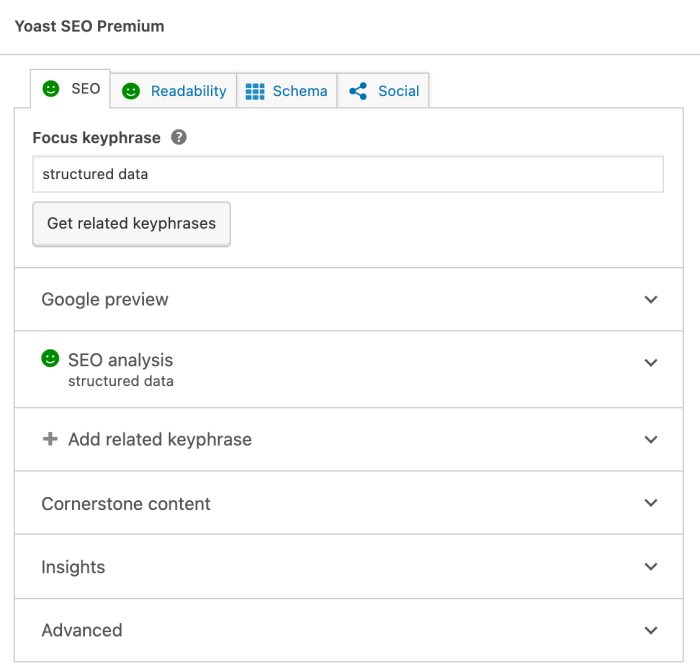
The inner workings of Yoast are fascinating, a blend of clever code and sophisticated algorithms designed to help you craft compelling content that also performs well in search engines. Understanding how it integrates with various platforms and the real-time feedback it provides is key to leveraging its full potential. Let’s delve into the technical underpinnings of this powerful tool.
Integration with Content Management Systems (CMS) and Instant Feedback
Yoast ‘s brilliance lies in its seamless integration with popular content management systems (CMS) like WordPress, Drupal, and others. This integration is not just superficial; it’s deeply woven into the core functionality of these platforms, allowing for real-time analysis and feedback as you write.The magic happens through a combination of plugins and APIs. When you install the Yoast plugin, it injects itself into the CMS’s content creation interface.
This means that as you type your content, the plugin actively monitors and analyzes your text, identifying s, assessing readability, and evaluating best practices. This instant feedback is crucial for several reasons:* Real-time Optimization: Instead of waiting until you publish your content to see if it meets standards, you get immediate insights. This allows you to make adjustments on the fly, saving time and effort.
Contextual Analysis
Yoast understands the context of your content. It analyzes not just individual words but also how they relate to each other, the overall structure of your article, and your chosen focus .
Platform-Specific Adaptation
Yoast is designed to adapt to the specific features and functionalities of each CMS. For example, it might provide different recommendations for WordPress versus Drupal, based on their unique architecture and considerations.
API Interactions
Yoast uses APIs to communicate with search engines, gather data, and provide up-to-date recommendations. This includes checking rankings, analyzing competitor content, and suggesting improvements based on the latest trends.This real-time feedback loop is a significant advantage. It allows you to create -friendly content more efficiently, improving your chances of ranking higher in search results. Think of it like having a personal coach constantly whispering advice in your ear as you write, guiding you towards optimal content quality and search engine visibility.
This continuous feedback loop is powered by a sophisticated algorithm that is regularly updated to reflect the ever-changing landscape of search engine optimization. Yoast ’s ability to parse and analyze your content in real time, providing actionable insights, is what sets it apart.
Common Challenges and Solutions
While Yoast is a powerful tool, users sometimes encounter challenges. Here’s a breakdown of common issues and how to address them:* Challenge: Over-Optimization: Trying to stuff too many s into your content, leading to unnatural-sounding text and potentially hurting your search rankings.
Solution
Focus on writing naturally and engagingly. Use your focus strategically, but prioritize readability and user experience. Yoast ‘s readability analysis can help you balance usage with content quality.* Challenge: Conflicting Recommendations: Sometimes, Yoast might suggest contradictory changes. For example, it might flag a sentence for length while also suggesting you add more s.
Solution
Consider the overall context. Don’t blindly follow every recommendation. Use your judgment and prioritize the suggestions that best align with your content goals and target audience.* Challenge: Technical Issues: Plugin conflicts or other technical glitches can sometimes disrupt Yoast ‘s functionality.
Solution
Ensure your CMS and Yoast plugin are up-to-date. If problems persist, try deactivating other plugins one by one to identify potential conflicts. Consult the Yoast support documentation or community forums for troubleshooting tips.* Challenge: Misunderstanding the Traffic Light System: New users sometimes struggle to interpret the green, orange, and red lights in Yoast ‘s analysis.
Solution
Understand that the lights are a guide, not a definitive verdict. Green indicates that the specific criteria are met, orange suggests improvements are needed, and red signifies serious issues. Focus on achieving as many green lights as possible, but don’t obsess over them.* Challenge: Cannibalization: Using the same focus for multiple pages, potentially leading to competition between your own content.
Solution
Carefully plan your content strategy. Target different s or long-tail variations for each page. Use Yoast to monitor your usage and ensure you’re not inadvertently competing with yourself.* Challenge: Ignoring Readability: Prioritizing over readability can result in content that is difficult to understand and unappealing to readers.
Solution
Pay close attention to Yoast ‘s readability analysis. Use shorter sentences and paragraphs, vary your sentence structure, and break up long blocks of text with headings and subheadings.
Key Features of the Yoast Content Quality Assessment Tool
Yoast ‘s content quality assessment tool is packed with features designed to help you optimize your content for both search engines and users. Here are the key features:
- Readability Analysis: This feature assesses the readability of your content, evaluating factors like sentence length, paragraph length, use of transition words, and passive voice. The goal is to ensure your content is easy to understand and engaging for your target audience. It provides a readability score and highlights areas for improvement. This is important because search engines value content that is accessible to a wide audience.
- Analysis: This feature analyzes your content for best practices, focusing on elements like usage, title tags, meta descriptions, image alt text, and internal/external links. It provides feedback on how well your content is optimized for search engines and suggests improvements to boost your rankings. This component guides the user through the essentials of on-page .
- Optimization: This feature helps you optimize your content for a specific focus . It checks if your appears in the title, meta description, headings, and body of your content. It also assesses density and related s to ensure you’re targeting your desired search terms effectively. This is crucial for attracting the right audience to your website.
- Content Structure Analysis: Yoast analyzes the structure of your content, looking at the use of headings, subheadings, and bullet points. It ensures your content is well-organized and easy to scan, improving the user experience and making it easier for search engines to understand your content. This directly impacts the user’s ability to quickly grasp the main points of your content.
- Internal Linking Suggestions: This feature suggests relevant internal links within your content. Internal linking helps users navigate your website, improves by passing link juice between pages, and helps search engines understand the relationships between your content. This improves the overall authority and structure of your website.
- Preview Snippet: Yoast allows you to preview how your content will appear in search engine results. This helps you optimize your title tag and meta description to attract clicks and improve your click-through rate. A compelling snippet can significantly influence whether users choose to click on your listing.
